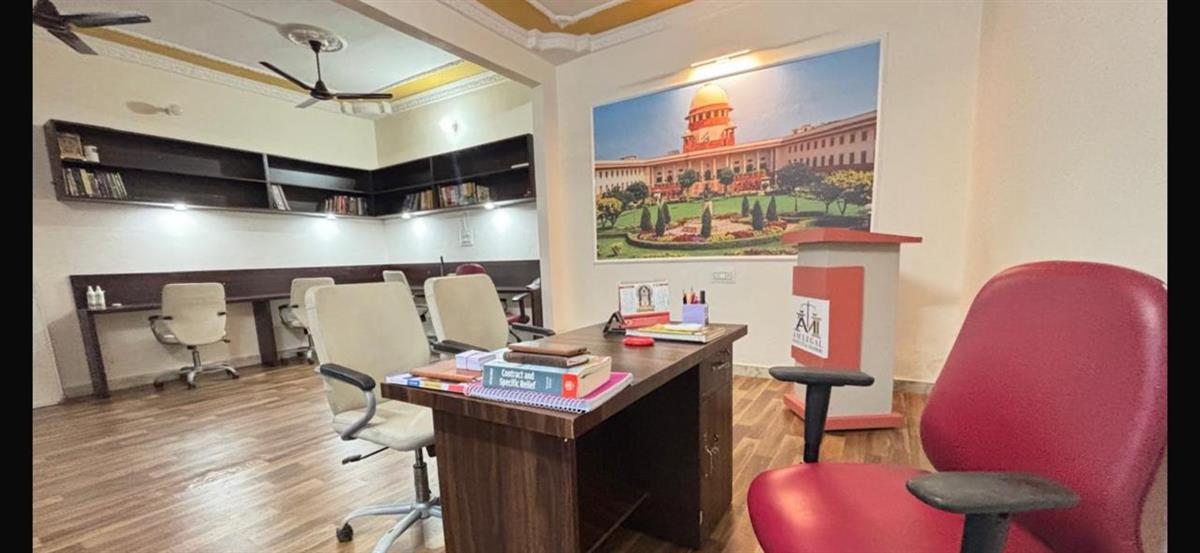
The room at the top of this post is the centre’s own — desk, racks and the bare acts the open-book practice is done with.
The pattern changes what “studying” means
With no negative marking, the paper rewards attempted breadth. With open-book access, the paper rewards retrievability. That is why preparation here is organised statute by statute rather than subject by subject: the work is building a route to the answer, not a memory. The syllabus spans roughly 25 legal subjects — Constitutional law, CPC, CrPC and BNS/BNSS, the Evidence Act (and the Bharatiya Sakshya Adhiniyam), Family Law, Professional Ethics, and Legal Awareness & Basic Maxims — and every one of them returns to the same handful of provisions.
The qualifying standard BCI has applied in recent editions is 40% for General and OBC candidates and 35% for SC and ST candidates. Before you plan against that number, check the notification you are actually registered under — the percentage and the open-book rules both come from the current instructions, not from last year’s habit.
“An answer you cannot find in two minutes is an answer you do not know, no matter what you remember at home.”
Open book is a skill, not a comfort
- Carry only what the instructions permit — clean bare acts, no annotations, no commentary, no highlighted notes.
- Learn the index, not just the sections. Knowing where a chapter begins is what saves you a minute; a minute is three questions.
- Practise with the same book you will carry. If you only ever studied from a phone screen or a PDF, the physical book becomes a new obstacle on exam day.
- Do not read the provision — read the conditions in the provision. AIBE questions turn on words like “may”, “unless”, “so long as”, and the limitation period.
Where the marks usually sit
Across papers, the same areas keep coming back. Work them in this order, with daily practice attached to each:
| Area | What the paper asks |
|---|---|
| Constitutional Law | Fundamental rights, DPDP, basic structure, amendment history, landmark holdings |
| CrPC & BNS/BNSS | FIR to chargesheet, bail categories, trial stages, sections most often misremembered |
| CPC | Jurisdiction, injunction, res judicata, decree, execution, limitation |
| Evidence Act & BESA | Admissibility, burden, presumptions, exceptions to the hearsay rule |
| Family Law & Succession | Marriage, maintenance, guardianship, inheritance under the major personal laws |
| Professional Ethics & Bar Rules | Advocates Act, BCI rules, contempt — the questions that trip up otherwise strong candidates |
| Legal Awareness & Maxims | Maxims, courts, tribunals, recent judgments — usually the fastest marks on the paper |
Four weeks, if you are sitting this paper
With the paper on 29 November 2026, the time left is short, so the plan has to be arithmetic, not intention.
Weeks 1–2
Coverage, in blocks
Two subjects a day: one heavy (CrPC, CPC), one light (maxims, legal awareness). Daily MCQs at the end of each block, and a running log of every question you got wrong.
Weeks 3–4
Paper conditions
Full-length papers under the real clock with the book you will carry. After each paper, spend longer on the analysis than on the attempt — the point is why the wrong answer looked right.
Daily, all four weeks
Ten questions
Ten questions a day, cumulative: every day asks something from a subject you studied earlier. This is what keeps month three holding month one.
Exam day
Attempt everything
No negative marking means an empty question is the only lost mark. Answer what you know, guess what you can narrow down, and leave two minutes at the end to fill blanks.
The AIBE batch at Ganga Nagar
The full AIBE course is ₹3,000 for four months, available online or offline — smart-board teaching, AC classrooms, high-speed Wi-Fi and the legal library for reference work. It runs on the same routine described above: dated notes, daily MCQs, weekly cumulative sets, full-length papers, and scripts marked back with comments rather than a score.
₹3,000 · 4 months · online or offline — fee & FAQ
Sources used for the pattern facts
Exam dates and registration windows quoted here come from the official AIBE portal: aibe.digivarsity.online and allindiabarexamination.com. Pattern, marking scheme and open-book rules are cross-checked against Careers360’s AIBE pattern page. The numbers in this post are taken from the current official instructions — check them against the notification for the attempt you are registered under.
Enquiry — this post